
Ingredients for 6 servings
- 0.50 l Milk
- 2 Stk Eggs
- 6 EL Wheat flour
- 1 pinch Salt
- 40 g Butter
- 1.50 l Beef broth
- 3 Stk Carrots (optional)
- 1/2 bunches fresh chives
Nutritional values
per serving · share of an adult’s reference intake
-
Calories: 245 kcal, 12 % of the daily target
-
Carbohydrates: 24 g, 9 % of the daily target
-
Protein: 10 g, 20 % of the daily target
-
Fat: 12 g, 17 % of the daily target
Tags
- Beef
- Lunch
- Soup
- Appetizer
- Autumn
- Winter
- Comfort Food
- Home cooking
- Regional
- Inexpensive
- Austria
- Non-alcoholic
- Nut-Free
- Frying Pan
- Soy-free
Comment from the chef
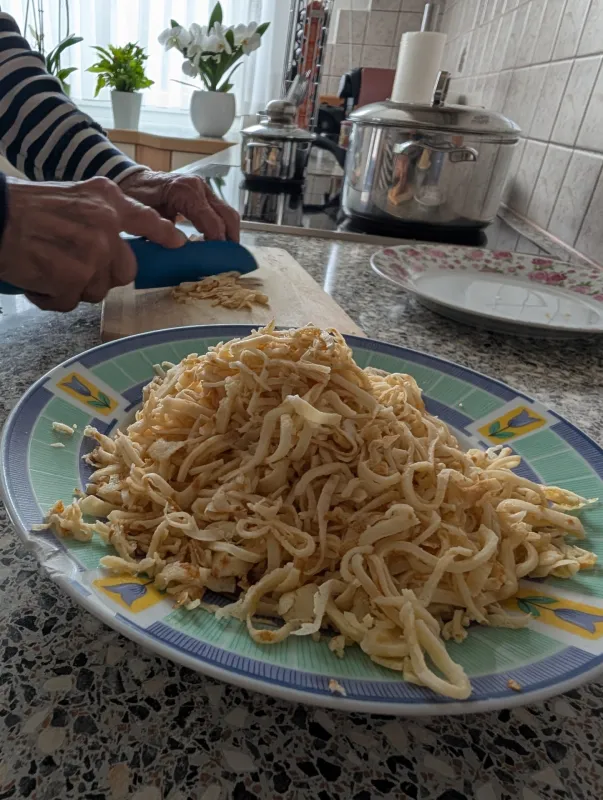
Last week, I was standing in the kitchen with my grandma, and we cooked her Fritatten soup together. For me, this isn’t just a soup—it’s a snapshot from my childhood: Sunday noon, the dishes with the colorful rims, and Grandma standing at the cutting board, slicing Palatschinken into strips so thin you can almost see right through them. The secret isn’t really a secret at all: a tiny bit of butter for each pancake, just a little batter in the pan (the thinner, the better), let them cool, and then cut them into super-thin strips with a lot of patience. Sounds simple, but Grandma has about 70 years’ worth of experience under her belt. I took notes and snapped some photos so this recipe would never be lost. By the way, the first two pancakes never make it into the soup at our house—they’re devoured right away, hot from the pan, with jam or torn into pieces. That’s just how it is. For the soup, I use my hearty beef broth made from soup meat and bones. A good store-bought beef broth will do in a pinch, but please don’t tell my grandma that.
* Bei Nussallergie: Prüft beim Einkauf die Zutatenliste jedes Produkts. Viele Produkte können Spuren von Nüssen enthalten, auch Schokolade, Müsli und Backwaren.
Community ratings
No reviews yet.
Steps
-
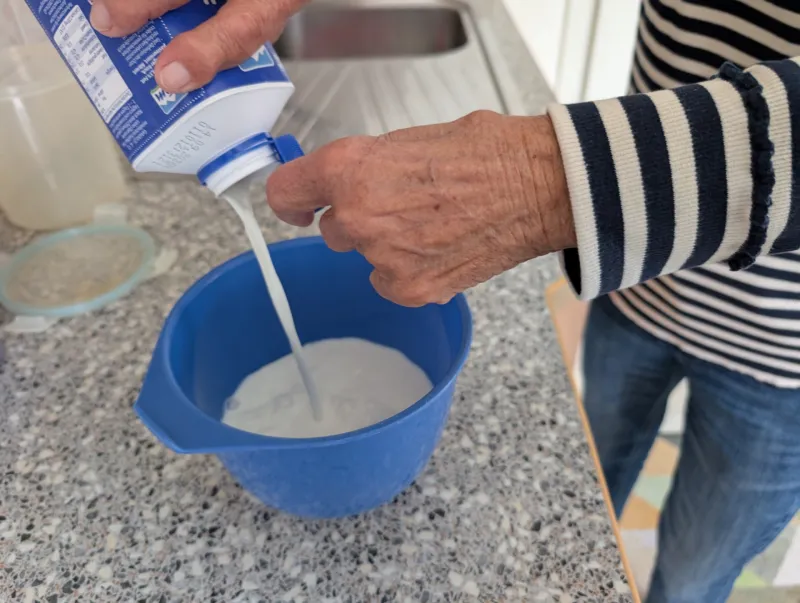
Let's Go for Milk!
We start with half a liter of milk in the mixing bowl. Grandma measures it by feel and has been getting it right for decades. For us mere mortals: 0.5 liters.
-
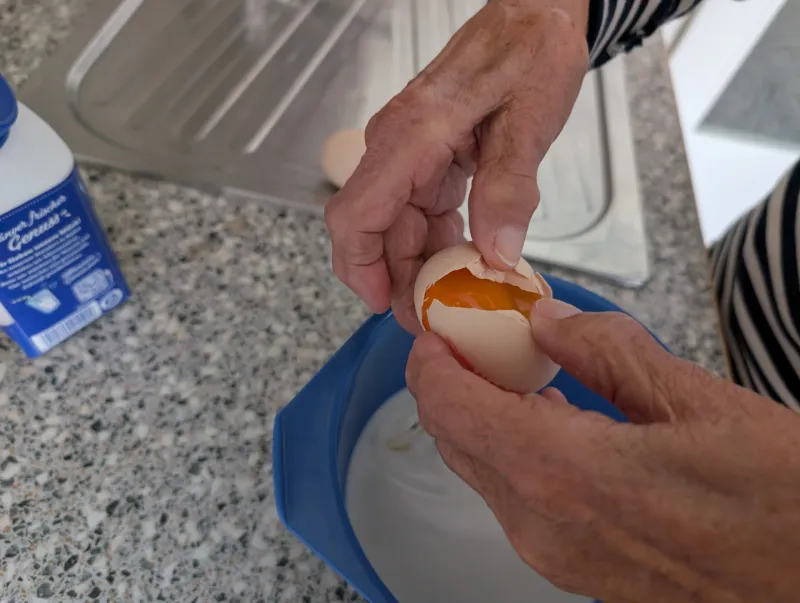
Crack the eggs
Add two eggs. Leave the shells out, of course. Just look at that yolk—you only get a color like that from chickens that have had a good life.
-
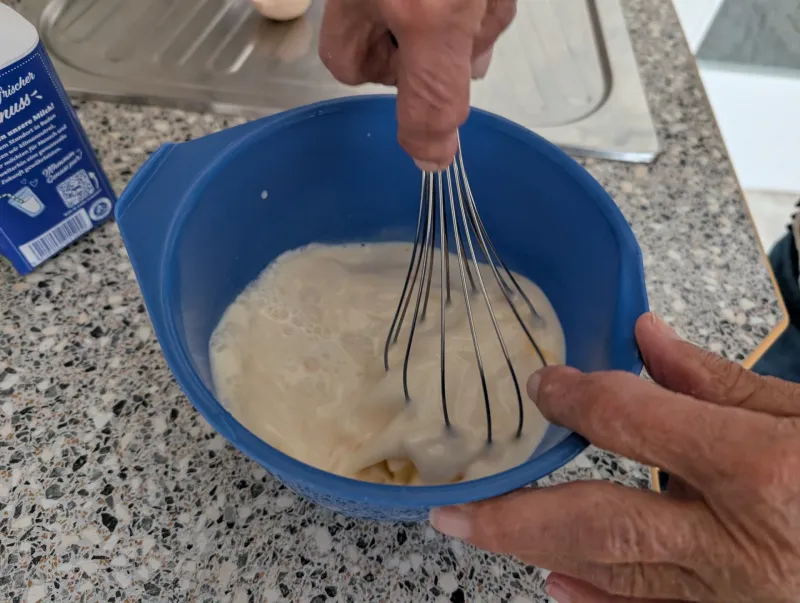
Whisk
Add a pinch of salt, then use a whisk to thoroughly beat the milk and eggs together. No mixer, no food processor—just a whisk and a little arm strength. Just like in the old days.
-
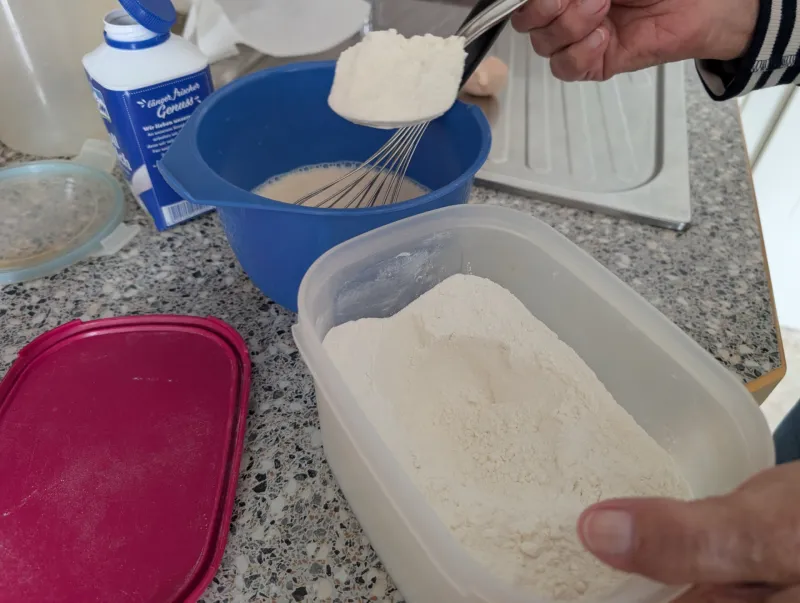
Flour & the Whisk Test
Now add the flour, one spoonful at a time: 6 heaping tablespoons, one after the other, stirring constantly in between—that way you won’t get any lumps. The whisk will tell you if the batter is right: lift it up and watch how it drips down. If it no longer looks completely liquid but slightly thickened, the batter is just right. You can always count on this trick from Grandma.
-
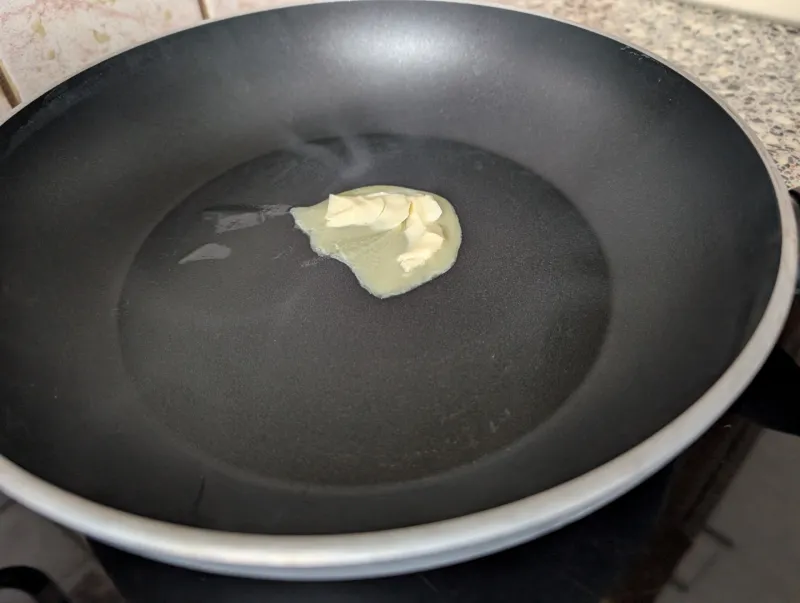
Pan & Butter
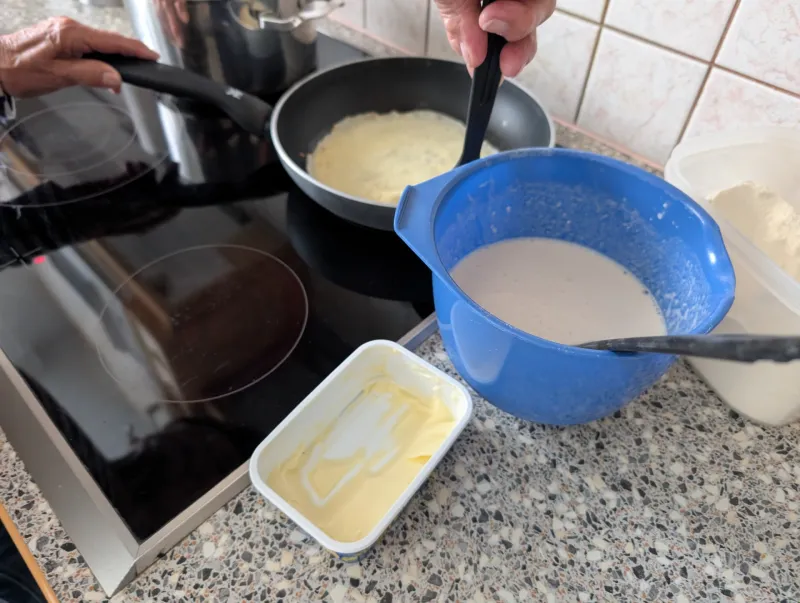
Heat a nonstick pan over medium to high heat and add a tiny bit of butter. Really, just a tiny bit—we’re baking pancakes, not deep-frying them. Important: Grandma does this for EVERY single pancake, not just the first one. That’s why the butter dish stays right next to the stove.
-
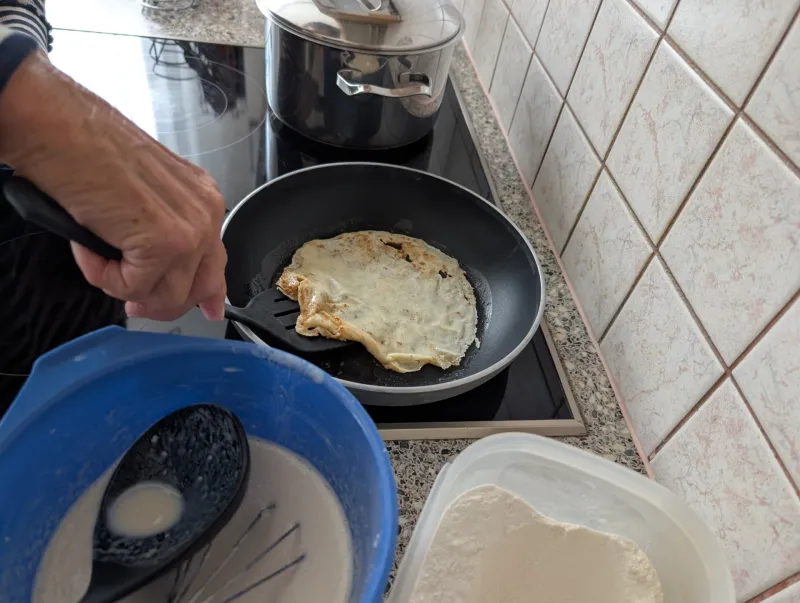
The First
Pour a small ladleful of batter into the pan, swirl it around, wait a moment, then flip it. The first pancake never turns out right—it’s a law of nature and no cause for concern. We usually eat the first two while they’re still cooking anyway: hot from the pan with jam, or simply torn into pieces and eaten straight from the pan. Someone’s got to taste them.
-
Not much dough, paper-thin
And so it goes, one after another: a little more butter, then just a tiny bit of batter in the pan, and swirl it immediately so it spreads out paper-thin. The thinner, the better. If you think there’s not enough batter, it’s probably just right. Grandma does this with a calmness that I’d love to emulate.
-
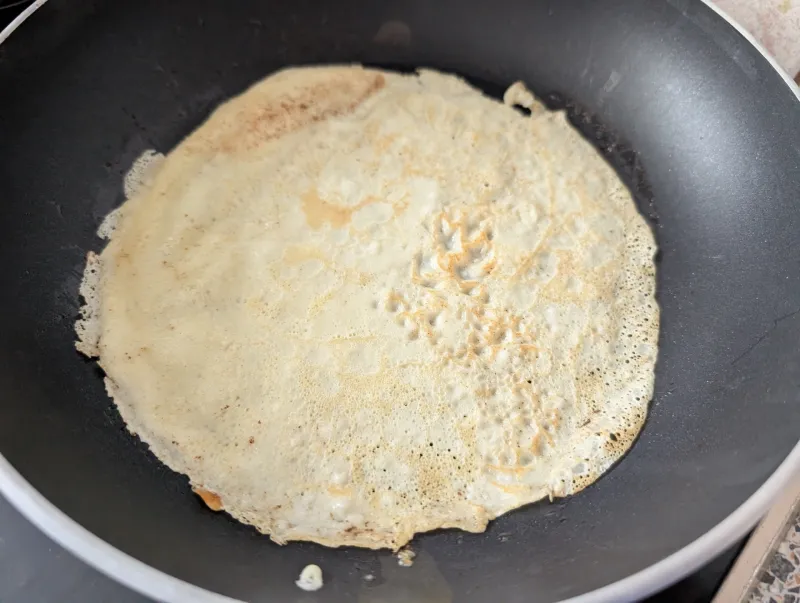
Bake until golden brown
- Duration: 2 min
This is what it should look like: paper-thin, with tiny bubbles and a delicate golden-brown pattern. It takes about a minute per side. Flip it over, let it finish baking briefly, then take it out.
-
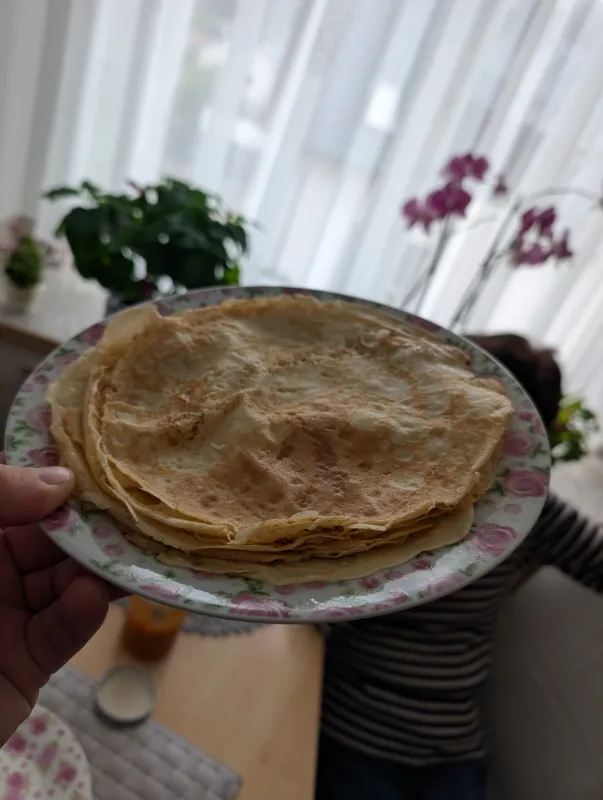
Stack & let cool
- Duration: 15 min
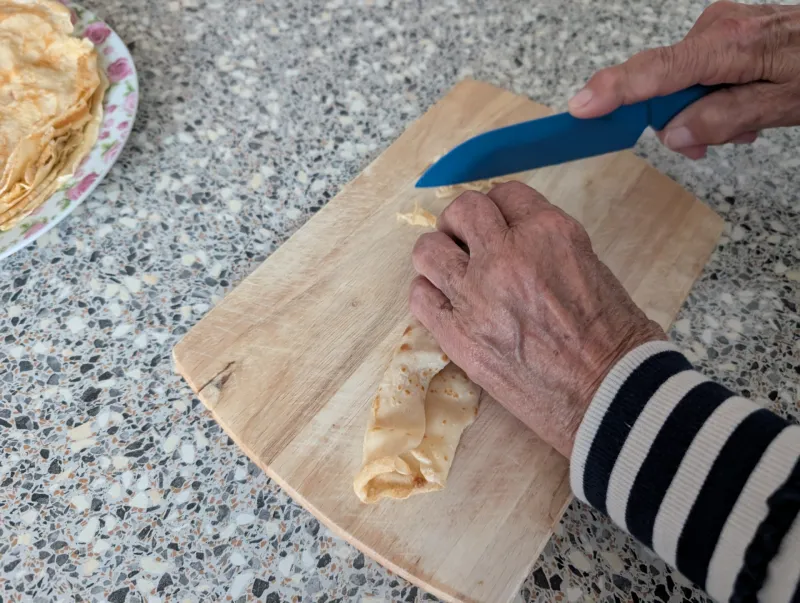
Stack all the finished pancakes on a plate (that pretty rose-patterned dish is a must—without it, they only taste half as good) and then let them cool completely. Please don’t skip this step: they can only be cut into really thin slices once they’re cool; if you try to cut them while they’re still warm, they’ll stick together. Patience is the most important ingredient here.
-
Roll & Cut
Now comes the part that’s really the point of it all and gives the recipe its name: Roll up each cooled Palatschinke tightly, one by one, and cut them into very thin strips with a sharp knife. Grandma does this so quickly and evenly that I can only stand there in awe.
-
Super thin!
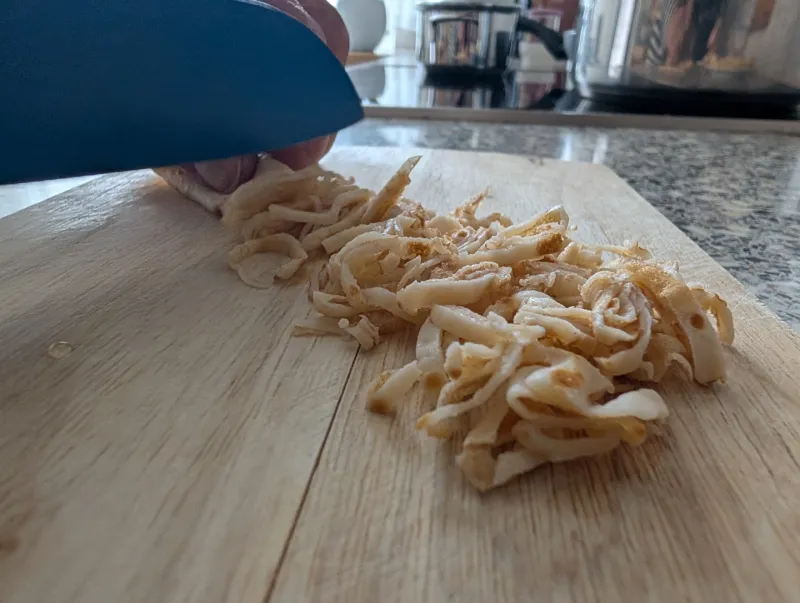
As thin as humanly possible. The width of a noodle is too wide—we’re talking about a few millimeters here. That’s why Grandma’s fritatten are so good: they soak up the soup but still don’t fall apart. I tried it, too—mine just turned out a bit more “rustic.”
-
Into the soup
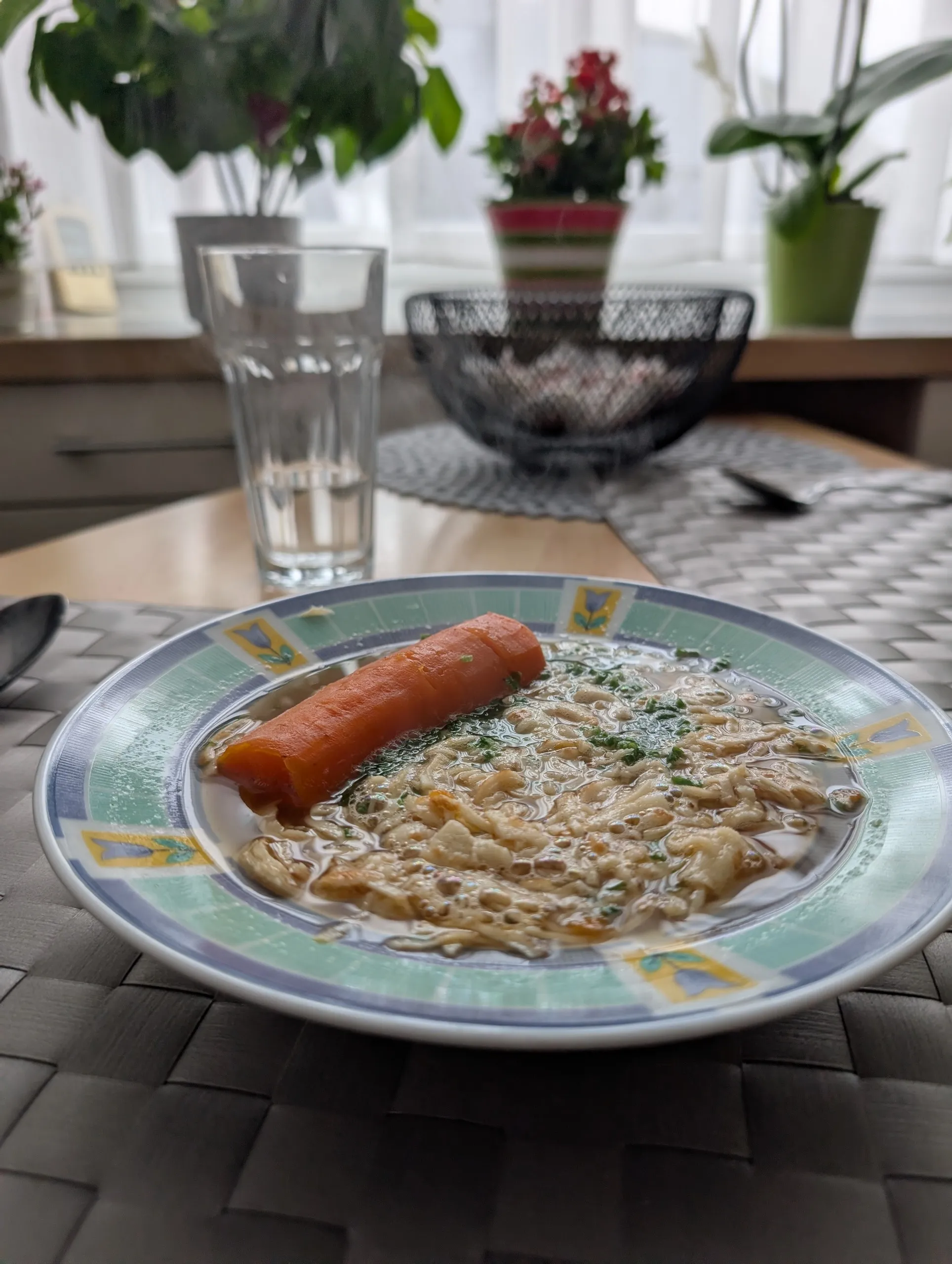
Pile a generous amount of Fritatten into a soup bowl, pour piping-hot beef broth over them (in our house, it was my hearty beef broth made from soup meat and bones, which was already simmering on the stove in the background), add a carrot from the soup, and top it off with fresh chives. That’s childhood in a soup bowl. Thanks, Grandma ❤️