
About the project
Behind this app is one person with too many ideas
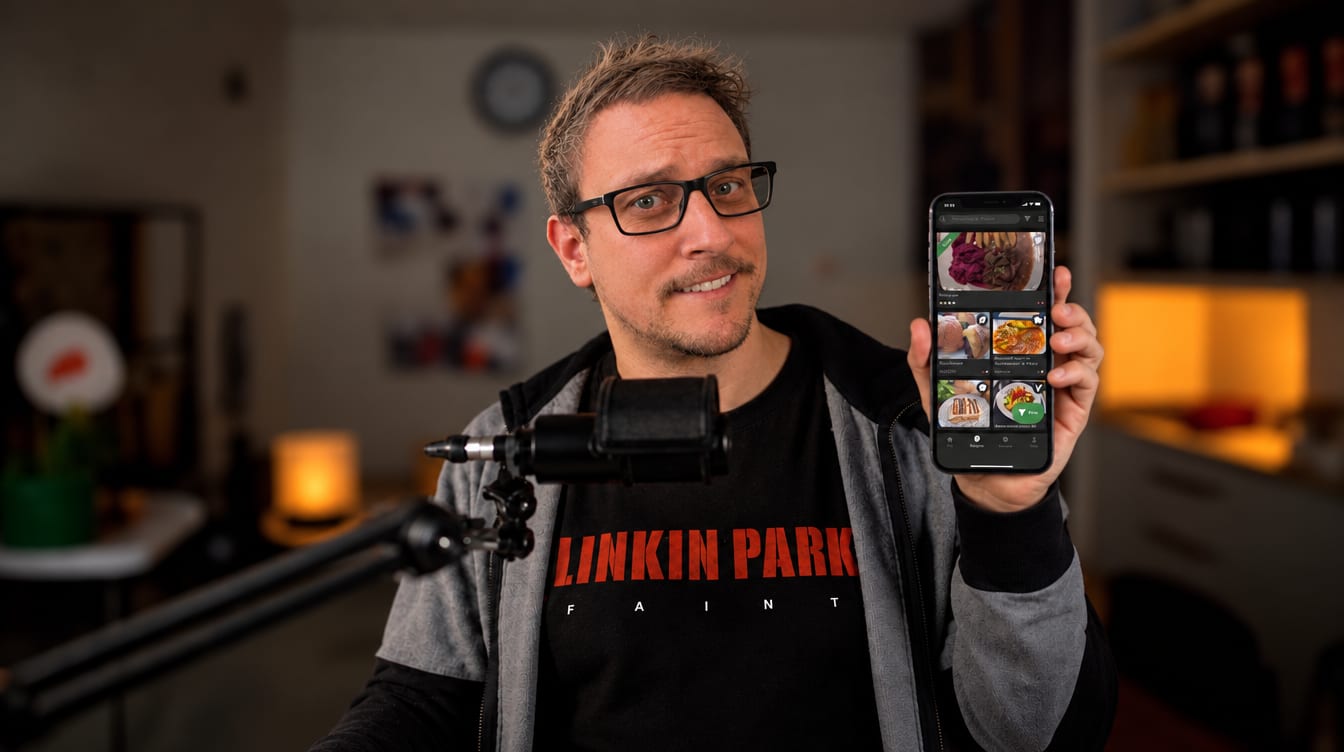
Hi. I’m Michael Wagner, and Royal Food Club is what happens when someone spends six years thinking about how he’d really like to keep his recipes, then makes the mistake of being a software developer.
This is the story of who built this thing and why. It ran a little longer than planned, which is pretty much how the rest of the project went.
Who’s actually cooking here?
Michael Wagner, MSc. I grew up in Austria, started out as a wholesale apprentice, got hooked on hardware and software on the side, and eventually switched over for good.
I did my civilian service with the Red Cross, and I’m still proud of that. Helping people through some of their worst moments seemed like a better use of my time than the alternative. I’d make the same choice again.
I like animals. Cats, capybaras, quokkas, beavers, rock hyraxes. I’ve never worked out who gave them permission to be that cute. I’ve just accepted that an evening set aside for coding can end with a capybara video.
If I’m honest, I’ve been lucky in life. A stable, happy home, good friends and people to look up to. Dad was the calm one. Mum brought the humour and the fire. My grandads seemed to know a little about absolutely everything, never ran out of questions and kept both feet on the ground. My grandmas had two things in abundance: a love of cooking and good food, and a supply of patience that apparently had no bottom.
You don’t have to look far to see where this project came from. I just put it in an app.
I don’t have many friends. I do have some very good ones. Thanks, folks. You know who you are. And I’m grateful for my life, for the chances I’ve had, and for getting to spend my evenings building things nobody asked me to build.
Gameboy, SNES and two very plausible culprits
I grew up on Gameboy and SNES before AI, the internet or social media were part of the picture. To find out how to beat a level, you asked someone in the playground who didn’t know either. You spent a lot of time figuring things out for yourself. It sticks.
Then I left school early. I take responsibility, of course, but Azeroth and Sanctuary deserve most of the blame. World of Warcraft and Diablo had much stricter attendance requirements than my school timetable, and I was a very conscientious adventurer.
Looking back, that was the most useful experience of my teens: failing early and thoroughly. Fall flat on your face at seventeen and by thirty-five you know what to call a failed prototype. Tuesday.
I still play. I streamed on Twitch for three years, usually with good friends as co-hosts and co-op partners. It was loud, chaotic and some of the most fun I’ve ever had. These days it’s mostly cosy games and side-scrollers with the same people. The reflexes are getting slower. The evenings are getting cosier.
The long way round to software development
I started as an apprentice in wholesale and qualified in wholesale and office administration. It’s hardly a straight line from there to software development, but I already loved hardware, software and anything I could build myself. Soon after my final exams I started taking on little IT projects in the back office.
A few years later, doing it on the side wasn’t enough. I really had to make it my day job. So I took the scenic route: I kept working, studied programming night after night and made it through the Fachakademie für Informatik.
Then came a master’s in mobile design, which I finished with distinction, with a thesis on native and hybrid mobile frameworks. In plain English, I voluntarily spent years studying topics nobody wants to hear about at a party.
I’ve been a software developer for sixteen years now and my heart’s still in it. For nine of those years I also taught web design, UI/UX and web technologies at FH St. Pölten. In 2025 I finally ran out of hours in the day and gave up teaching. I miss it more than I expected.
I also trained in business administration and qualified as a Fachwirt. Hardly romantic, I grant you. Handy, though, once your after-hours project starts getting real bills.
Six years since the idea, five years of building
The idea for this app is six years old. What came next involved more digging than coding. I dug into audience statistics, cooking and eating habits, Sinus-Milieus and figures on how people actually use recipe apps compared with how they say they do. Then there were user stories, UX design, UI design systems, entities and how they fit together.
In the end one question decided more than any statistic: What would I use myself, and what would I expect from it?
The rest took countless nights of thinking, sketching designs, polling friends on names (thanks for playing along, there really were a lot of names), building prototypes and trying things that often went straight in the bin. What survived held up. Those very first mockups still look uncannily like the app today.
I need a passion project outside work. Something to build when I need to lose myself in it. Sometimes months go by when nothing happens, and I’m fine with that too. Then come months of thinking, designing and polishing again.
Five years of on-and-off development later, I have noticeably more grey hairs, and I find new ones daily. Probably something to do with getting the trademark registered with the EUIPO.
The interview: I spill the beans
Royal Food Club nearly had a very different name. In the interview I reveal which names were in the running, what a recipe app has to do with the hero’s journey, and why I’d designed and printed out the entire API before a single pixel of the app existed.
I talk about the technical puzzles that kept me busy, especially how to build a server that stays on its feet when everyone swipes through the feed at once. And what experience points and ranks are doing in a recipe app in the first place.
Naturally I also get into why I think my app runs rings around Pinterest and company when it comes to finding a recipe and cooking from it. After all that work I’m allowing myself a little bragging.
One subject is close to my heart: recipes for people with coeliac disease, allergies or intolerances, and a collection as varied as the people cooking here. You won’t hear any promises about food curing anything.
I also talk about what I still have in mind for the Club. More than anything, I hope you enjoy it, eat well and have a good time together.
The question everyone asks these days
I had the bad luck to design most of this project five years ago, when AI help was still wishful thinking. So I designed the architecture, model and concept myself, and did a tidy enough job that they still hold up.
I’ve also had the good luck to release it at a time when AI can deal with much of the work around the edges. Tests, copy, simulations, repetitive jobs. It helped me knock this text into shape too. The notes, the opinions and the mistakes are mine.
And I’ve had the bad luck to release it at a time when it’s easy to assume AI did the actual work. Everyone and their grandad is a vibe coder these days.
So, in the friendliest possible way: give it a go. Try prompting your way in a few weeks to a product where everything fits together. In this case that’s an app, an API and a website that took years of sweat and the occasional tear. We’re not there yet. Honestly, I’m quite glad about that.
These lines in particular will probably age terribly.
Why this isn’t a fitness tracker
Royal Food Club is a passion project with no profit motive. I want you and me to have a reliable, good-looking, thoughtfully designed tool that gets out of the way and does the things it’s here for.
Those things do not include a shopping list, a cost calculator, a budget planner or a calorie coach. The idea is simpler: I’d rather use this than Pinterest. A consistent interface that makes sense. Cooks I follow. Meeting people, wandering through the feed, trying recipes and saving them. That’s plenty.
I considered a great many ideas and threw a great many out. Throwing them out was consistently the harder part.
I badly underestimated what it costs to keep everything running reliably. And what it costs to translate everything, which I insisted on because plenty of people cooking in German-speaking countries would rather read Arabic, Turkish or Ukrainian. That’s why there are a few ad spots (really, only a few), tucked into the feed, and an optional, inexpensive supporter subscription that removes partner placements from the feed and adds a few premium features.
For now the goal is to grow. Behind it is a thought that wouldn’t pass for a business plan but has kept me going for five years: If you love your project and the work of creating it, you’ll make a success of it.
What else falls off the workbench
I’ve always had projects alongside my day job. Game, web and app design have fascinated me for as long as I can remember. A few of those ideas even survived the prototype stage.
A few more prototypes are still waiting for me and my designer buddy Sebastian to finally build them, especially Jelly Bubbles and the platformer we’ve been talking about for what feels like a decade. Sebastian, if you’re reading this: I know. I know.
Curious to try some of the old releases? They’re on xSheetGames.com. The site is old and looks its age. Please don’t judge my UI design by it.
Between bow, tennis court and frying pan
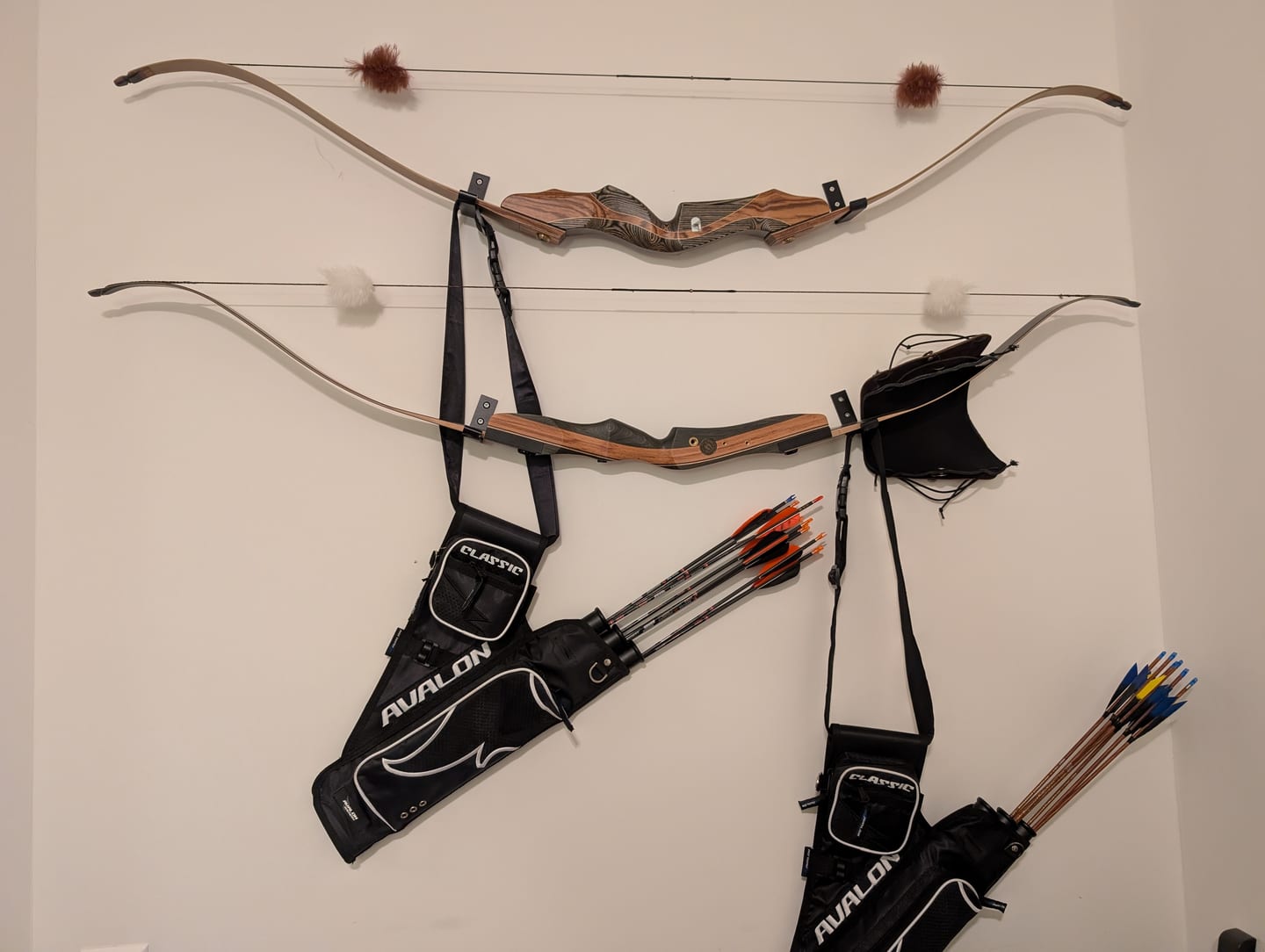
Exercise comes in phases for me. Sometimes I’m out shooting arrows, skiing, hitting the gym or hiking. Other times I do more cooking, take photos or play electric guitar. I also play tennis enthusiastically and very moderately well. Enthusiasm and ability have been on separate trajectories for years.
Two things are constant: time with my family, and plenty of cooking followed by even more eating. I’m a foodie, unfortunately. If you do the maths, making those sporty phases permanent would be the smarter move.
Without music, life would be a mistake
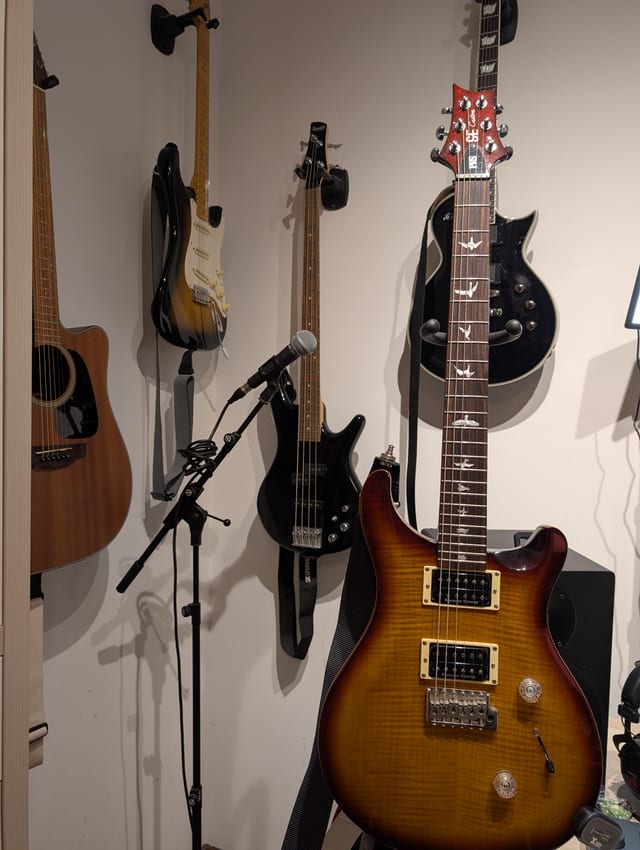
I stole that line, but I stand by it. Metalcore, metal, rock, alternative: if it’s got guitars, it moves me. I also have an alarming number of musical guilty pleasures that will remain unnamed. This is non-negotiable.
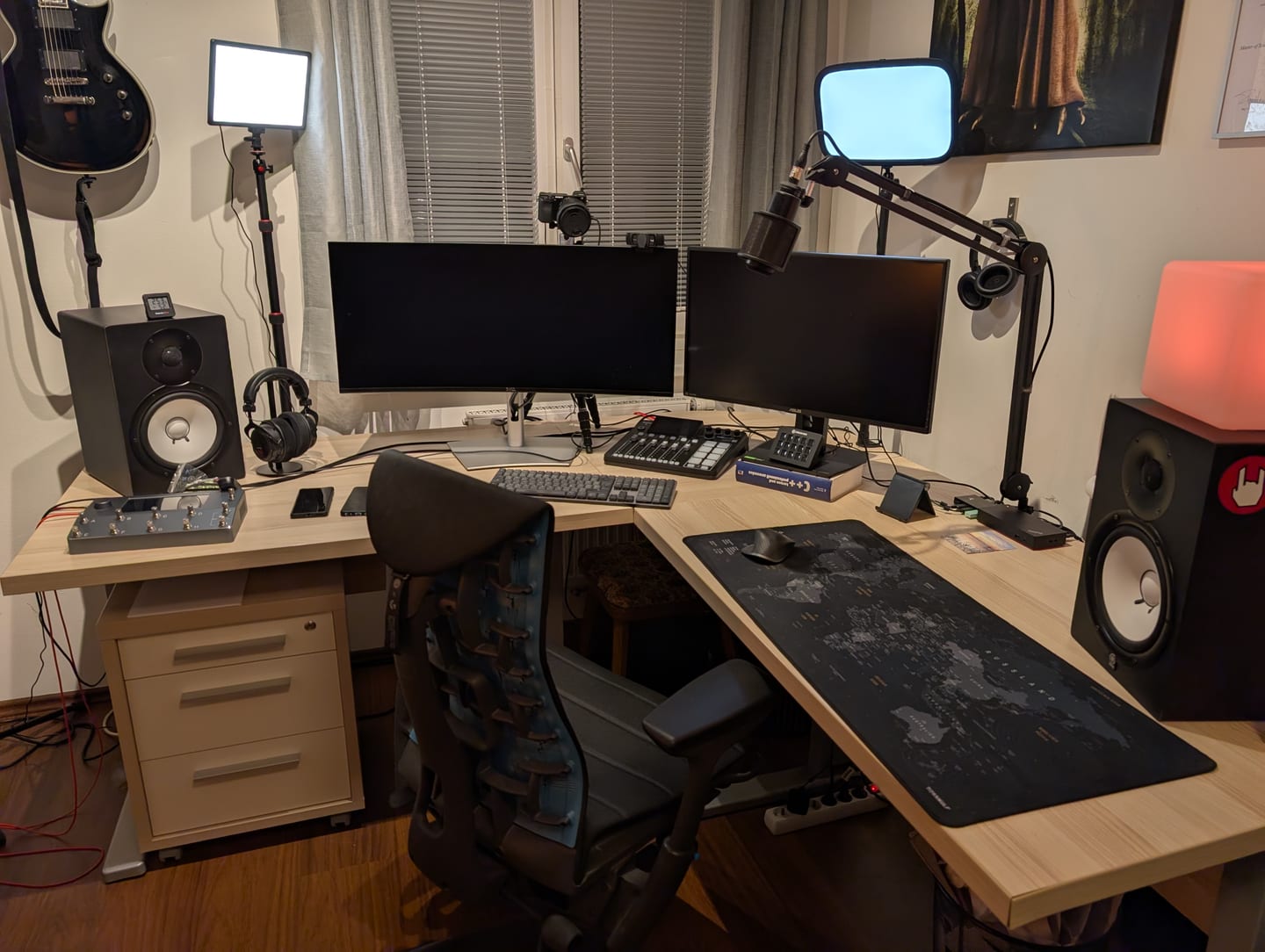
Far too rarely, I still get together with my old bandmates to play for fun. Time permitting, I disappear into my home recording setup: Cubase, guitars, synths, vocals. The world isn’t waiting for the results. I just know of no better way to clear my head than an afternoon with headphones, a riff and far too much reverb.
Thanks
A few things I deliberately left to people who can simply do them better. Designer Nina Pils created the logo. Thank you, Nina.
Thank you to Heli, who’s put up with bugs, crashes and assorted grief since the alpha and still stuck around. Some of the recipes here are hers, entered back when it was anyone’s guess whether they’d survive being saved.
Thanks to Alex and Manuela, who cooked and tested tirelessly. Whenever I asked, yet again, what could be better, they stuck around for the question and actually answered it.
The biggest thank-you goes to everyone who took part in the beta or is still taking part. You volunteer to use something unfinished and tell me about things I stopped seeing a long time ago because I’ve spent five years with my nose pressed up against them. That’s the most valuable feedback this project can get.
And thanks to everyone who’s been patient with my questions about their cooking habits, my repeated pleas for just a few more recipes for the beta, and who’s lent me an ear whenever I needed one.
I hope you have fun with Royal Food Club. And I hope this collection ends up full of wonderful recipes.

